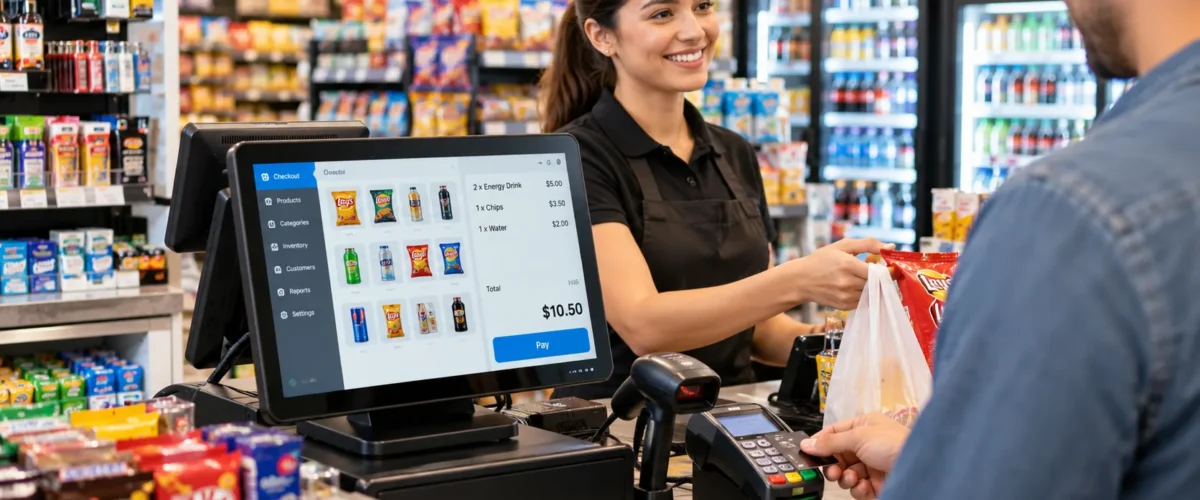
Convenience stores work fast. One person is ordering coffee, another wants a lottery ticket, and the third is paying for fuel for an age restricted product. A simple cash register is unable to handle multiple activities simultaneously. A POS system for convenience stores integrates checkout, compliance, inventory, lottery operations, fuel sales, and reporting into a single streamlined experience. It can make cashiers work quicker, maintain cleaner records, and require less manual checking during busy shifts, staff changes, or at the end of the day. This article will discuss the power of one convenience store POS system when it comes to the lottery, age verification, fuel transactions, faster payments, inventory control, reporting, and smooth daily operations.
Unique Requirements of a Convenience Store POS
A convenience store handles different types of transactions without slowing the counter down. It can process packaged products, prepared food, tobacco, alcohol, lottery products, prepaid items, and fuel in the same shift. The system must also be fast at scanning barcodes, clearly prompt for age, have a smooth payment method with hardware, cash controls, and correct shift reporting. The key is to ensure the moving components of a convenience store POS system work together for speedy transactional processing and to give store managers easy access to sales, exceptions, inventory monitoring, and store performance.
Simplify Lottery Sales and Ticket Management
Lottery transactions become easier to control when ticket activity fits into the same practical workflow as everyday counter sales.
Integrated Lottery Terminal Connectivity
Integrated lottery connectivity can reduce the need to jump between separate screens or duplicate entries. Cashiers can handle eligible lottery transactions alongside purchases, while supported connections keep ticket activity organized. This creates a cleaner counter workflow and fewer manual steps.
Lottery Inventory and Sales Tracking
Lottery tickets need to be tightly tracked because each pack, activation, sale, payout, and reconciliation impacts store records. Using a connected POS system, managers will be able to see how much is being sold by shift, cashier, and game, which can help to organize the lottery activity.
Faster Customer Service During Peak Hours
The morning commute or evening rush can be a delay that becomes a long line. If a lottery transaction flows seamlessly into the checkout path, there’s less time for the cashier to switch between systems; users can move quicker without delaying teh checkout process.
Strengthen Compliance with Built-In Age Verification
With age restrictions, the guesswork is minimal. Built in verification can alert cashiers to scan items such as tobacco, alcohol, vape, lottery, or other restricted products, ensuring cashiers adhere to store policy and local ordinances. By scanning the ID, it will help eliminate manual data entry and streamline the checkout process. A POS system for convenience stores can also record verification events, cashier activity, and transaction details. This gives managers a clearer audit trail and makes employee training easier when compliance procedures or store level controls need review.
Integrate Fuel Transactions into a Single POS Platform
A POS system for convenience stores should connect forecourt activity with the counter so fuel and merchandise transactions are easier to manage together.
Real-Time Fuel Pump Integration
The real time pump integration enables cashiers to see fuel activity on the same counter system they use when making purchases in the store. Staff can handle prepaid fuel transactions and check pump status, and minimize manual handoffs, making the forecourt more seamless with the register.
Centralized Reporting for End-of-Day Operations
End of day close becomes easier when fuel totals, tender amounts, refunds, and shift activity sit in one reporting environment. Managers can compare register data with fuel transactions, investigate differences sooner, and complete reconciliation with fewer spreadsheets, handwritten notes, or repeated calculations.
Unified Reporting for Fuel and In-Store Sales
The Unified reporting provides owners with an overview of what was happening in the store and at the counter. They are able to benchmark fuel revenue to the sales of merchandise, analyze their tender mixes, recognize their rush periods, and understand how traffic at the forecourt affects their in store sales.
Speed Up Checkout with Faster Payment Processing
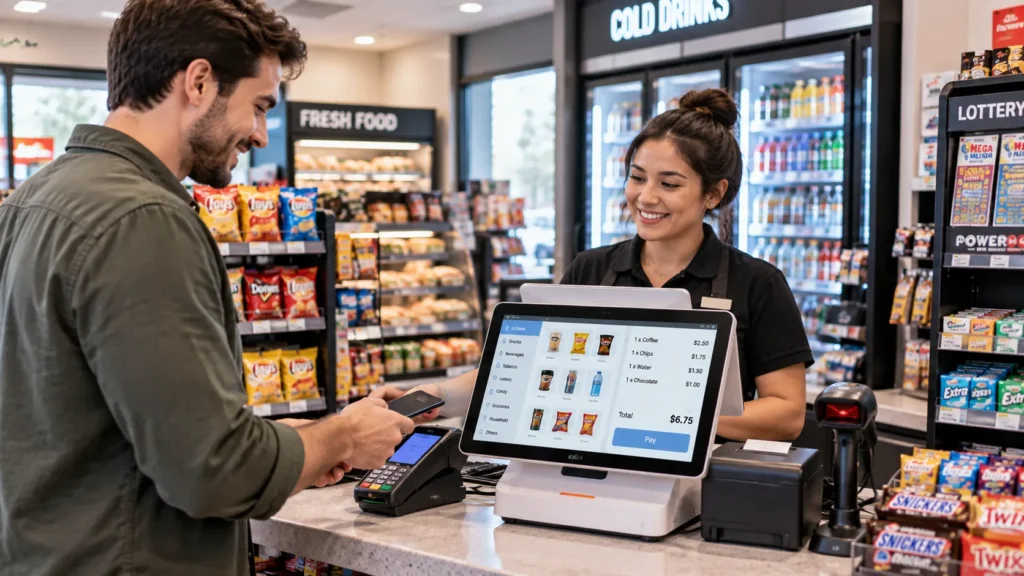
With fast payment processing, a short trip to the convenience store POS doesn’t take long, particularly if several people arrive in a short time period.
- Support common payment methods: Support cash, chip cards, contactless cards, and mobile wallets with compatible payment hardware so customers can apply these methods that they are accustomed to without waiting in line.
- Cut unnecessary register steps: Employ a clean screen format, programmable item keys, reliable barcode scanning, and easy prompts to ensure that cashiers can seamlessly work from the scanning to the payment phase without rummaging through menus.
- Keep checkout hardware dependable: Select terminals, scanners, receipt printers, and network connections that are able to handle consistent traffic. During rush hours, if equipment doesn’t move quickly or effectively, a queue can quickly form.
Improve Inventory Management Across Every Product Category
The inventory in convenience stores turns over rapidly, with drinks, snacks, and tobacco products, prepared foods, household products, and impulse items selling in different proportions. Manual count is subject to shrinkage, damage, vendor differences, and unexpected demand. A POS system for convenience stores can keep track of inventory as it moves through the store, arrange merchandise by category, facilitate reordering, and identify unusual movement. Managers can know how many items are actually on hand and compare that with the items they are selling, keep a closer eye on high risk items, and minimize the risk of having empty shelves during the most active hours of the day.
Gain Better Business Insights Through Centralized Reporting
Centralized Reporting Converts Everyday Transactions into Actionable Operating Data. Managers can view sales per hour, cashier, category, payment method, and store without having to import data from other systems. Fuel sales, lottery activity, in store purchases, refunds, discounts, and cash variances are more easily comparable. Clear reports also identify low sales, high selling products, odd voids, and margin variances. Owners have stronger visibility to make better staffing, pricing, purchasing, and promotion decisions rather than relying on end of week guesswork or on hodgepodge papers.
Steer Clear of Common Convenience Store POS Pitfalls
There are a number of common mistakes to be made when setting up an organization, and they all add to the work done when it comes to the register as well as in the back office.
- Choosing a generic retail POS: A basic system can scan products effectively and may be able to handle age prompts, lottery workflows, fuel transactions, quick access to PLU code, and shift recon. A basic system can scan products effectively and can handle age prompts, lottery workflows, fuel transactions, quick access to PLU code, and shift recon. Test real store scenarios prior to purchase.
- Ignoring hardware and support quality: Good software is unable to revive a failing scanner, weak network, slow terminal, or an unreliable printer. Inquire about hardware compatibility, updates, technical support, backups, and how the situation is handled if the internet connection drops out.
- Keeping key data in separate systems: If the information for fuel, lottery, inventory, payments, and cashier activity is tracked separately, it will take longer to reconcile for errors to be traced. Encourage the use of reporting that enables managers to see a clearer picture of their operations.
Upgrade Your Convenience Store with Gokul POS Platform
Convenience stores benefit from practical applications of Gokul POS to help them manage their inventory quickly and efficiently, such as real time inventory management, support for multiple payments, detailed reporting, multi-store management, ID scanning, cloud backup, and cloud based lottery software. If you are comparing a POS system for convenience stores, Gokul POS can help bring sales, stock, customer activity, and management data into a more organized workflow. Review your store’s lottery, compliance, payment, and fuel integration requirements during setup, then request a tailored demo at Gokul POS for your store location.

Founder & CEO of Gokul System Solutions: Based in Schaumburg, Illinois, he leads a company providing Point of Sale (POS) and payment solutions for retail industries in the USA, Canada, UK, and India.